
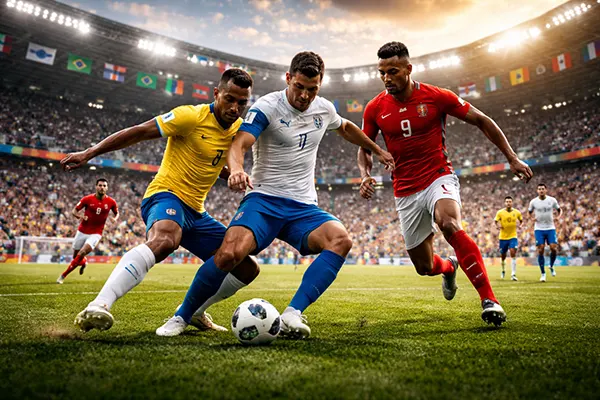
World Cup 2026: How the 48-team format changes group tactics and the real value of a draw
The 2026 World Cup is built around a simple headline: 48 teams. The knock-on effect is anything but simple. The tournament uses 12 groups of four teams, with the top two in each group and the eight best third-placed sides advancing, which creates a new round of 32 before the later knockout rounds. That single change reshapes how coaches “price” a draw, when they gamble for a win, and why goal difference stops being a nice extra and becomes a weekly obsession.
What the 12×4 group stage really changes (and what it doesn’t)
What stays familiar is the rhythm: each team still plays three group matches, and points remain the core currency. The difference is the safety net. Third place is no longer automatically terminal. A third-placed team can progress if its record compares well across the twelve groups, which lowers the “must-win” pressure in certain situations, but also creates new traps.
The second change is the size of the knockout field. With 32 teams reaching the knockouts, the first elimination step becomes an extra hurdle. Coaches now plan for a longer path: one more do-or-die match can punish teams that peak too early or burn their best players just to finish first in the group.
Third, incentives inside the group become more variable from match to match. In a four-team group you can still reach a final round where a draw suits two teams, but now both must also consider how that result looks in the wider “best third-placed” comparison. That extra layer pushes teams to care about margins, discipline, and game-state management across all three fixtures, not only the last one.
The new arithmetic of “enough points” and why goal difference gets louder
Classic target numbers still matter: 4 points often keeps you alive, 6 almost always sends you through, and 3 is risky unless the group is chaotic. What’s new is that “alive” might mean third place, and third place is now a tournament-wide contest. A cautious 1–1 can feel acceptable inside the group table, yet look fragile when compared with other third places that have the same points but better goal difference or more goals scored.
That is why late goals change value. At 1–0 up in the 85th minute, the decision is no longer only “protect the win”. It becomes “do we push for 2–0 to strengthen our tie-break profile, or do we protect the clean sheet and avoid volatility?” Because third-placed teams are compared across different groups, margins can quietly become the difference between going home and reaching the round of 32.
It also changes how teams respond to adversity. A red card, an injury, or an early concession used to trigger all-or-nothing chasing because third place had no meaning. Now, even a damaged performance can be “banked” if a team avoids a heavy defeat. Minimising losses becomes a strategic tool, not a moral victory, because a third-placed side on -1 goal difference sits in a very different position to one on -4.
How the value of a draw shifts across the three matchdays
Matchday 1 becomes more conservative for many teams, especially those seeded lower. A draw in the opener is not just “a point gained”; it can be the foundation of a third-place route. That encourages compact mid-blocks, fewer reckless full-back jumps, and heavier set-piece planning. Coaches often accept lower shot volume if it keeps the match close and preserves energy for fixtures they believe are more winnable.
Matchday 2 is where the format creates the biggest tactical split. If a team wins its opener, it can approach the second match with controlled aggression: take calculated risks to secure qualification early, then manage minutes later. If it draws or loses, the second match becomes a balancing act—chase three points without turning the game into a transition festival. The format rewards teams that can change gears: press for a spell, drop into structure, then raise intensity again when the opponent tires.
Matchday 3 produces two different types of pressure. In some groups, a draw between two teams may suit both, but third-place comparison creates uncertainty: you can be “safe in the group” and still be vulnerable in the wider table. That uncertainty pushes coaches to seek an insurance goal rather than freeze the match completely, which can make supposedly cautious games surprisingly tense.
Three late-game scenarios coaches will rehearse for 2026
Scenario 1: You’re second, leading 1–0 late. The default instinct is to lock it down, but the choice is more nuanced now. If finishing first likely gives a cleaner path in the round of 32, a team may press for a second goal. If fatigue is building and the tournament route is longer, the smarter play can be to protect the result and save legs. The correct answer depends on squad depth and the specific group situation, which is why match management becomes as important as pre-match tactics.
Scenario 2: You’re third, drawing 0–0 late. This is where the “price of a draw” can be highest. One point might be valuable, but a late concession can destroy your third-place comparison. That often creates asymmetric risk: one team pushes, the other refuses to open. Coaches may introduce pace for counters rather than extra midfield control, because the safest way to chase a win is sometimes to threaten space behind without overcommitting numbers.
Scenario 3: You’re on 4 points and think third place is realistic. Teams in this position may value “not losing heavily” more than chasing a fragile win. That can mean switching shape earlier, slowing restarts, and turning the match into a set-piece contest. It’s not pretty, but it’s rational: the format makes survival a legitimate tactical objective, and it rewards teams that keep emotional discipline when the margins are tight.
Why the 48-team format changes preparation: rotation, pressing, and set-pieces
The additional round of 32 increases the number of high-stakes matches required to reach the later stages, and that changes preparation. Rotation becomes less about resting stars and more about maintaining intensity: fresh legs for pressing triggers, fresh defenders for repeated transitions, and fresh wide players for late-game acceleration. Coaches who treat the group stage as a controlled build rather than a sprint are more likely to arrive sharp when the knockouts start.
Pressing is also likely to become more situational. Teams that press relentlessly for 90 minutes across three group matches risk arriving in the elimination rounds flat. Expect more “pressing in blocks”: aggressive openings, calmer control phases, then targeted bursts after substitutions. The sides that execute tempo shifts cleanly can take points without burning through their physical reserves.
Set-pieces gain extra value because they reduce variance. In a format where a single point can decide whether a third-placed team progresses, dead-ball efficiency matters even more. A well-drilled corner can turn a cautious 0–0 into a controlled 1–0, and that changes not only the group table but also the tie-break profile used in cross-group comparisons.
Practical tactical lessons: how teams can avoid the “safe draw” illusion
Lesson one is to treat goal difference as an active metric, not a passive by-product. Even if you prefer control, build a plan to threaten for the second goal when the opponent tires. That might be an extra runner from midfield, a planned overload on one flank, or a substitution designed to add pace without breaking structure.
Lesson two is to rehearse your “protect” and “push” modes as separate mini-systems. Too many teams defend a lead by abandoning the patterns that created it. Protecting a draw or a one-goal advantage needs clear behaviours: where the counter-press happens, which passes are allowed under pressure, and how the far-post zone is defended when fatigue sets in.
Lesson three is not to assume one point is automatically good. Because only eight third-placed teams advance, some third places will miss out. A draw is valuable only if it fits a bigger plan: points total, tie-break profile, and the energy budget required for a longer knockout route. The teams that understand that context and make calm decisions inside it will get the biggest edge from the 48-team era.
The most popular articles
-
 2026 Boxing Super-Fight Calendar: The Bouts That Could Reshape Divi...
Professional boxing enters 2026 with several divisions approaching decisive moments. …
-
 Top transfer news
Stay updated with the summer transfer window as we bring …
-
 Betsson Betting Site: An Unbiased Examination
In the dynamic world of online sports betting, platforms rise …
-
 A career in MMA is not a good decision
Ben Askren has been able to make solid money in …