
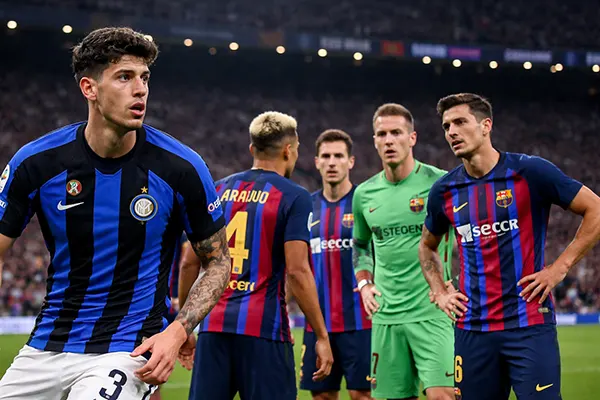
Barcelona After Champions League Exit: Can Bastoni Solve Defensive Issues?
Barcelona’s latest Champions League exit once again exposed structural weaknesses that have been lingering beneath the surface for several seasons. While the attack continues to deliver moments of brilliance, the defensive line remains inconsistent, particularly against high-intensity European opposition. The growing discussion around a potential move for Alessandro Bastoni reflects a broader attempt to stabilise the back line with a defender who combines tactical intelligence with composure in possession.
Why Barcelona’s Defence Struggled in Key Matches
Barcelona’s defensive issues are not limited to individual mistakes; they stem from a combination of tactical risks and squad imbalance. The team often pushes its full-backs high, leaving central defenders exposed in transition. Against elite sides, this approach has repeatedly led to dangerous counter-attacks and goals conceded at crucial moments.
Another factor is the lack of a consistent defensive partnership. Injuries and rotation have prevented stability at centre-back, forcing players to adapt constantly to new pairings. This disrupts communication and positioning, particularly in high-pressure matches where split-second decisions determine outcomes.
Additionally, Barcelona’s current defenders vary in profile. Some excel in possession but struggle physically, while others are strong defensively but less comfortable building from the back. This imbalance becomes evident when facing teams that press aggressively and exploit any hesitation.
Structural Weaknesses in Modern Barcelona’s Back Line
The team’s defensive structure is heavily influenced by its commitment to possession-based football. While this philosophy remains central to Barcelona’s identity, it also creates vulnerabilities when the ball is lost in advanced areas. Opponents have learned to target these moments with direct, fast transitions.
Midfield support also plays a crucial role. When pressing fails or becomes disorganised, defenders are left isolated. Without proper shielding from defensive midfielders, centre-backs are forced into difficult one-on-one situations, increasing the likelihood of errors.
Set-piece defending has been another concern. Despite improvements, Barcelona still concedes chances from corners and free-kicks, often due to poor marking or lack of physical dominance. This is an area where a player with Bastoni’s awareness could offer immediate value.
What Alessandro Bastoni Brings to the Table
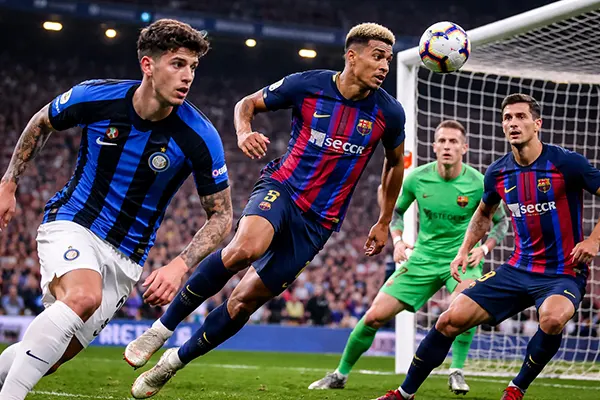
Alessandro Bastoni has developed into one of Europe’s most reliable modern defenders at Inter Milan. Known for his composure under pressure, he fits the profile of a centre-back capable of thriving in possession-oriented systems. His ability to progress the ball from deep positions aligns with Barcelona’s tactical demands.
Defensively, Bastoni combines positioning with anticipation rather than relying solely on physicality. He reads the game well, intercepts passes, and maintains discipline in maintaining the defensive line. These qualities are particularly valuable in a system that requires defenders to operate in high spaces.
Another key strength is his experience at the highest level. Having played consistently in Serie A and European competitions, Bastoni is accustomed to facing top attackers. This experience could help Barcelona handle high-stakes matches more effectively.
How Bastoni Fits Barcelona’s Tactical System
Bastoni’s left-footed profile is especially important. Barcelona has long sought balance in central defence, and a natural left-sided defender improves build-up play by opening passing angles and speeding up transitions from defence to midfield.
He is also comfortable stepping into midfield when required, a trait that complements Barcelona’s positional play. This allows the team to maintain numerical superiority in central areas without sacrificing defensive coverage.
Moreover, Bastoni’s calm decision-making reduces unnecessary risks. Instead of forcing aggressive tackles, he focuses on positioning and timing, which helps maintain defensive stability—something Barcelona has lacked in decisive European fixtures.
Potential Impact and Remaining Challenges
While Bastoni could address several defensive issues, his arrival alone would not solve all problems. Barcelona’s defensive struggles are partly systemic, meaning adjustments in midfield balance and pressing structure are equally necessary. Without these changes, even a top defender could face similar challenges.
Financial constraints also complicate the situation. Barcelona must carefully manage transfers, balancing immediate needs with long-term sustainability. A move for Bastoni would likely require significant investment, making it a strategic decision rather than a simple upgrade.
There is also the question of adaptation. Transitioning from Serie A to La Liga involves different tactical rhythms and attacking styles. Although Bastoni has the qualities to adapt, integration into Barcelona’s system would require time and consistency.
Can One Transfer Change Barcelona’s Defensive Identity?
Historically, Barcelona’s best defensive periods have relied on cohesion rather than individual brilliance. Players like Piqué and Puyol thrived within a structured system supported by disciplined midfielders. Recreating that balance remains the primary challenge.
Bastoni could serve as a cornerstone for rebuilding that structure, offering both technical quality and defensive reliability. However, success would depend on how well the coaching staff integrates him into a cohesive unit rather than relying on him as a standalone solution.
Ultimately, the potential transfer represents more than just a defensive reinforcement. It signals an attempt to evolve Barcelona’s approach—maintaining its identity while addressing the practical demands of modern European football.
The most popular articles
-
 Betway Betting Site Review
Welcome to our comprehensive review of Betway, a leading name …
-
 Unibet
Unibet is one of the most established names in European …
-
 Why Bookmakers Adjust Odds: Behind the Scenes of Risk Analytics
Understanding how odds change in sports betting is key for …
-
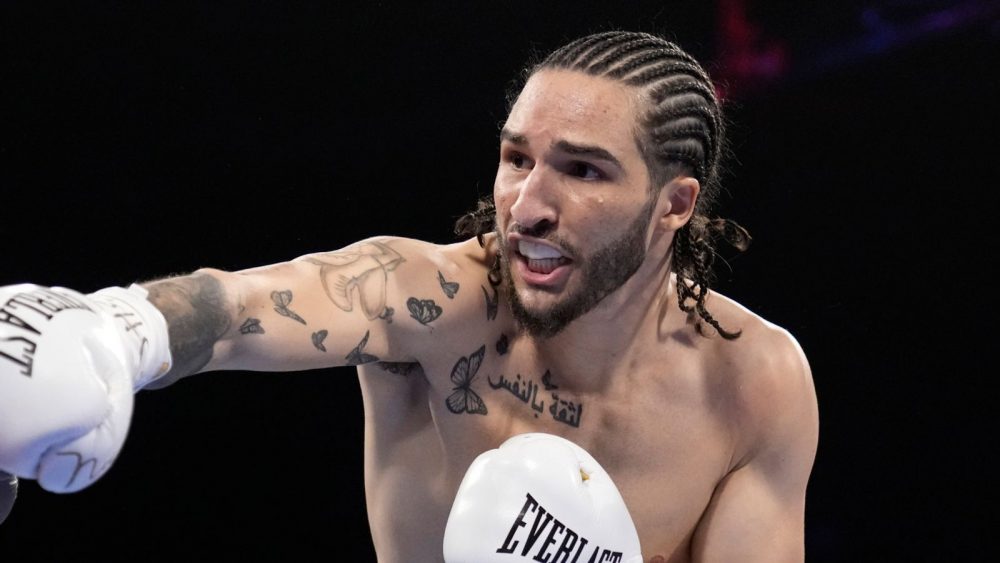 Is Nico Ali Walsh the heir to the Great One?
If we talk about the greatest boxer of all time, …